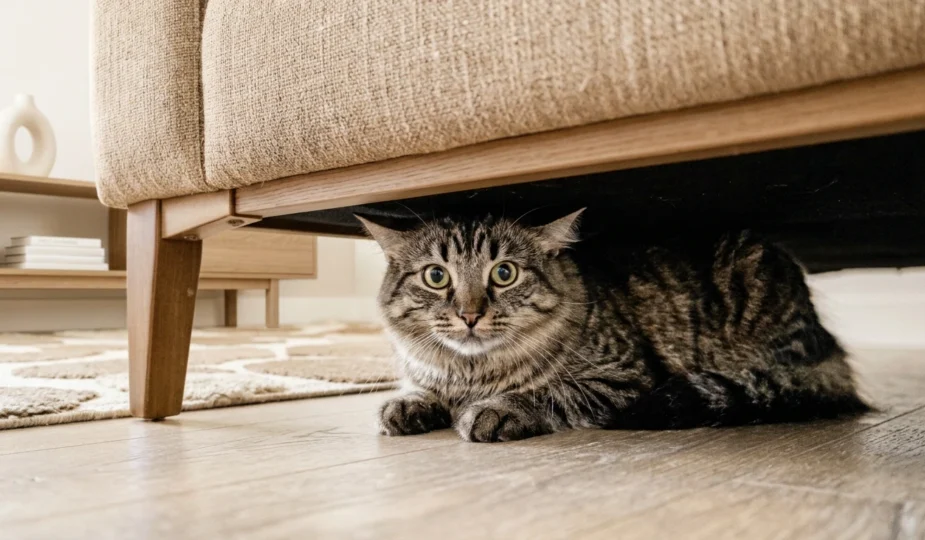
Have you ever watched your cat suddenly disappear under the bed after hearing a loud noise? Or noticed your usually friendly cat hide when a visitor walks through the door?
Cats can seem confident and curious one moment and frightened the next. But what is a cat’s worst fear? Is it loud noises, unfamiliar people, other animals, or something else?
There isn’t one answer that applies to every cat. Each cat has a different personality, background, and set of experiences. However, one situation can be especially frightening for many cats: feeling trapped, threatened, or unable to escape.
Understanding what scares your cat can help you create a home where they feel safe, comfortable, and confident. Let’s look at seven common things cats fear, how to recognize those fears, and what you can do to help.
What Is a Cat’s Worst Fear?
A cat’s worst fear depends on the individual cat and its experiences. Some cats are frightened by thunderstorms, while others become anxious around unfamiliar people, dogs, or changes in their surroundings.
However, feeling trapped or having no way to escape a perceived threat can make a frightening situation even more stressful.
Cats naturally rely on their ability to move away from danger. When they cannot hide, retreat, or find a safe place, they may respond by freezing, hissing, scratching, or trying to escape.
According to the Merck Veterinary Manual’s guide to behavior problems in cats, fear is a normal response to a perceived threat. A frightened cat may hide, withdraw, crouch, vocalize, or show defensive behavior.
So, rather than looking for one universal worst fear, it’s more helpful to understand the situations that commonly make cats feel unsafe.
7 Things That Scare Cats the Most
Cats can be sensitive to their surroundings. Sounds, unfamiliar experiences, and interactions they cannot control may all trigger fear.
Here are seven common things that can frighten your feline companion.
1. Loud and Unexpected Noises
A sudden loud sound can startle almost any cat. Their sensitive hearing helps them detect sounds that people may barely notice, so unexpected noises can be particularly overwhelming.
Common examples include:
- Thunderstorms and fireworks
- Vacuum cleaners and hair dryers
- Loud music or television
- Construction noises
- Doors slamming
- Sudden shouting or screaming
Some cats simply run away and hide when they hear a loud noise. Others may remain tense long after the sound has stopped.
How to help: Give your cat access to a quiet room where they can retreat during noisy situations. Keep windows and doors closed during fireworks or storms, and never force your cat to stay near a sound that frightens them.
2. Unfamiliar People and Visitors
Does your cat disappear whenever someone rings the doorbell?
Many cats are cautious around unfamiliar people. A visitor may bring unfamiliar smells, sounds, movements, and behavior into what your cat considers their safe territory.
Some cats may approach guests after a few minutes, while others prefer to observe from a distance or hide until everyone leaves.
Children can also frighten cats when they move suddenly, shout, chase them, or try to pick them up without warning.
How to help: Ask visitors to give your cat space. They should avoid chasing, reaching for, or forcing contact with your cat. Let your cat decide whether to approach.
Offering a treat or a favorite toy can help create a positive association with visitors, but your cat should always be free to walk away.
3. Dogs and Other Animals
Even cats that live peacefully with other pets may feel frightened by unfamiliar animals.
A barking dog, a strange cat outside the window, or an animal that approaches too quickly can make a cat feel threatened.
The reaction depends on the cat’s personality, previous experiences, and how the animals are introduced. Some cats are comfortable around dogs, while others become anxious even when they see one from a distance.
How to help: Introduce animals gradually. Give your cat a separate safe area and never force them to interact. Make sure your cat has places to climb, hide, and retreat where other animals cannot follow.
4. Unfamiliar Environments and Sudden Changes
Cats are creatures of habit. They often feel more comfortable when their surroundings, daily routines, and familiar objects remain predictable.
That is why moving to a new home, rearranging furniture, welcoming a new pet, or changing their usual routine may cause stress.
A trip to the veterinarian can also be frightening because it involves a carrier, transportation, unfamiliar smells, strange sounds, and handling by unfamiliar people.
How to help: When possible, introduce changes gradually. If you’re moving, prepare a quiet room with familiar bedding, toys, food, and water. Let your cat explore the new environment at their own pace.
Avoid making several major changes at once when you can.
5. Being Restrained or Forced to Accept Contact
Many cats enjoy affection, but that doesn’t mean they enjoy every kind of physical contact.
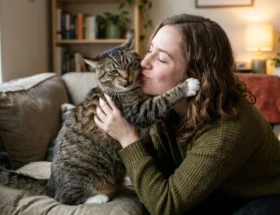
Some cats dislike being picked up, hugged, held tightly, or touched in certain areas. When they cannot move away, they may feel trapped.
Even affectionate actions, such as hugging or kissing, may be uncomfortable for a cat that doesn’t enjoy close physical contact.
Not sure whether your cat enjoys being kissed? Read our article about whether cats like kissing to understand how cats may respond to human affection.
How to help: Pay attention to your cat’s body language. Let them approach you when they want attention, and stop petting if they show signs of discomfort. Respecting your cat’s boundaries helps build trust.
6. Punishment and Negative Experiences
Cats do not always understand punishment in the way people expect. Yelling, hitting, chasing, or spraying a cat with water can make them associate a person or situation with fear.
For example, a cat that is repeatedly shouted at for scratching furniture may become frightened whenever that person approaches.
Negative experiences can also create lasting associations. A cat that has been chased by a dog may become anxious around other dogs, even when they are not behaving aggressively.
The Cornell Feline Health Center explains that physical punishment can increase fear and anxiety in cats.
How to help: Use patience and positive reinforcement instead of punishment. Reward the behavior you want to encourage, and try to understand why your cat is behaving a certain way.
If your cat is scratching furniture, for example, provide appropriate scratching surfaces rather than frightening them for following a natural instinct.
7. Losing Access to a Safe Hiding Place
Imagine being frightened and having nowhere to go. That is how a cat may feel when its favorite hiding place suddenly becomes unavailable.
Cats often use hiding spots to feel protected and to observe their surroundings without being disturbed. A quiet corner, a covered bed, a cardboard box, or a space under the furniture can become an important safe place.
Removing access to these spots, blocking familiar hiding places, or allowing other pets to corner a cat can increase stress.
How to help: Make sure your cat has several safe places to retreat. These can include covered beds, cardboard boxes, cat trees, shelves, or quiet rooms.
A frightened cat should never be dragged out of its hiding place just because you want to comfort it. Give them time to feel safe enough to come out.
How Can You Tell If Your Cat Is Scared?
Cats don’t always show fear by running away. Some hide, while others freeze or become defensive.
Learning to recognize the signs can help you understand when your cat needs space.
Common signs of fear include:
- Hiding or trying to escape
- Flattened ears or ears turned sideways
- Dilated pupils
- A crouched body with the tail tucked close
- Hissing, growling, or spitting
- An arched back or puffed-up fur
- Trembling or remaining unusually still
- Refusing food or avoiding interaction
A frightened cat may also scratch or bite if it feels cornered and cannot escape.
The Cornell Feline Health Center’s guide to feline behavior describes several body-language signs associated with fear, including flattened ears, dilated pupils, and a tucked or closely wrapped tail.
Remember that one behavior alone doesn’t always mean your cat is frightened. Look at the whole body, the situation, and any changes from your cat’s usual behavior.
How to Help a Scared Cat Feel Safe
You cannot prevent every frightening experience, but you can help your cat feel more secure at home.
Here are a few simple ways to support a frightened cat.
Give Your Cat Space
When your cat hides or moves away, resist the temptation to follow them or pull them out. Give them time to calm down.
Create Safe Hiding Places
Provide quiet, comfortable hiding spots in different areas of your home. Make sure your cat can reach them easily and that other pets cannot trap them there.
Keep Daily Routines Predictable
Regular feeding times, play sessions, and familiar resting places can help cats feel more secure.
Introduce New Experiences Gradually
Whether you’re introducing a new pet, a visitor, or a different environment, take things slowly. Let your cat approach when they feel ready.
Use Positive Reinforcement
Treats, toys, and gentle encouragement can help your cat develop positive associations with experiences that previously frightened them.
Never Punish Fearful Behavior
Hissing, hiding, and running away are often signs that your cat feels uncomfortable or threatened. Punishing these reactions can make the situation worse.
If your cat develops a sudden fear, becomes unusually withdrawn, or shows persistent anxiety, speak with a veterinarian. Pain and other medical problems can sometimes affect behavior, so a sudden change should not automatically be assumed to be a personality issue.
For more information, see VCA Animal Hospitals’ guide to fears and phobias in cats.
Can Cats Overcome Their Fears?
Yes, many cats can become more comfortable with situations that frighten them, especially when they receive patient and appropriate support.
The process depends on the cause and intensity of the fear. Some cats become comfortable with visitors after several positive, calm experiences. Others may need more time and professional help.
Veterinary behavior professionals may recommend gradual exposure and positive associations, a process often called desensitization and counterconditioning.
The important thing is not to rush your cat. Forcing them to face a frightening situation can increase their stress rather than help them overcome it.
Progress may be slow, but small improvements matter.
Frequently Asked Questions
What is a cat’s biggest fear?
There is no single fear shared by all cats. However, feeling trapped, threatened, or unable to escape can be especially frightening. Loud noises, unfamiliar people, other animals, and sudden environmental changes are also common triggers.
Are cats afraid of the dark?
Cats generally see better than humans in low light, so darkness itself is not usually a major fear. However, a dark, unfamiliar environment may make some cats feel less secure, especially if they cannot easily find their way around.
What sounds scare cats the most?
Sudden and loud sounds can frighten cats. Fireworks, thunder, vacuum cleaners, construction noises, and slamming doors are common examples. Individual cats have different sensitivities.
Why is my cat suddenly scared of everything?
A sudden change in behavior may be related to a frightening experience, environmental stress, or an underlying medical problem. If your cat becomes unusually fearful, withdrawn, or defensive, arrange a veterinary checkup to investigate the cause.
Do cats remember things that scared them?
Cats can form associations between unpleasant experiences and particular people, places, animals, or situations. A frightening experience may therefore influence how they react when they encounter something similar again.
Every Cat Deserves to Feel Safe
Cats may be independent, curious, and sometimes wonderfully confident, but they also need to feel protected.
Understanding what scares your cat is not just about avoiding loud noises or unfamiliar situations. It is about recognizing their boundaries, respecting their need for space, and giving them the freedom to feel safe in their own home.
Being a loving cat mom also means understanding your cat’s needs, respecting their personality, and making sure they feel secure. If you’re curious about the meaning behind this special bond, read our article about what being a cat mom means.
After all, a happy cat isn’t one that never feels afraid. It’s one that knows it has a safe place to return to.