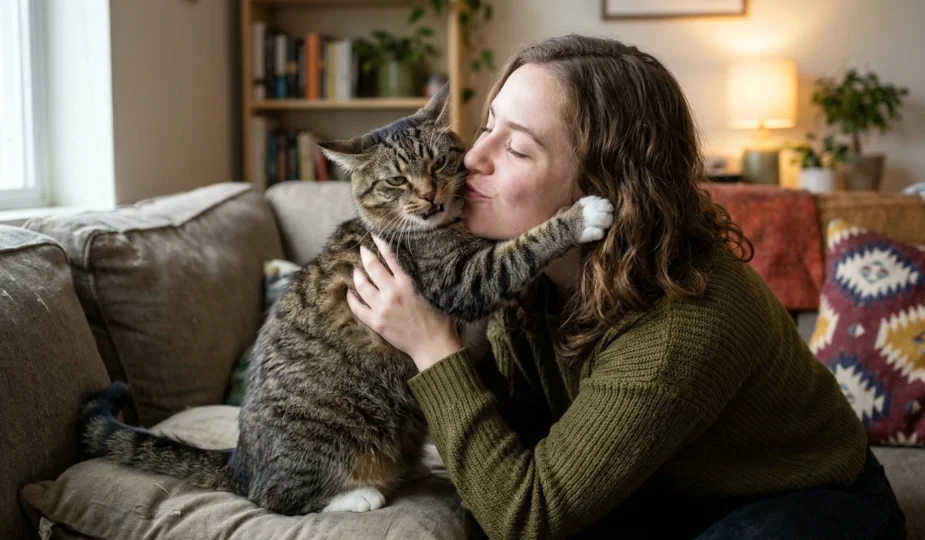
If you live with a cat, you probably know the feeling. Your cat is curled up beside you, looking especially adorable, and suddenly you have the urge to give that little face a kiss.
But have you ever wondered what your cat thinks about it?
Do cats actually like kissing? Do they understand that a kiss is a way of showing love? Or are they simply putting up with our human expressions of affection?
The answer is a little more interesting than you might expect. Cats don’t naturally greet each other with human-style kisses, but they have their own ways of showing affection and building trust. Some cats even learn to enjoy gentle kisses from the people they feel closest to. And if you’re curious about what being a cat mom really means, it’s all about the special bond, love, and care we share with our feline companions.
Let’s explore what happens when you kiss your cat, how to tell whether your feline friend enjoys it, and how to show affection in a way your cat understands.
Do Cats Like Kissing?
Some cats enjoy being kissed, while others would rather you didn’t.
It really depends on the individual cat, its personality, its experiences, and how comfortable it feels with human contact.
Cats are not naturally inclined to kiss each other on the face the way humans do. However, they communicate affection through physical contact, scent, grooming, and body language.
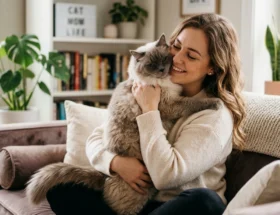
When you gently kiss a cat that trusts you, it may associate the experience with familiar smells, warmth, and positive attention.
Some cats respond by:
- Purring or relaxing.
- Closing their eyes slowly.
- Rubbing their head against you.
- Staying close or moving closer.
- Gently touching you with their nose.
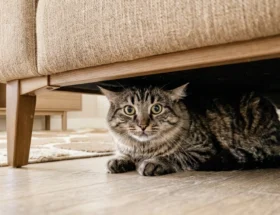
Other cats may turn their heads away, move back, flatten their ears, or simply leave.
And that’s perfectly normal.
The important thing is to pay attention to your cat’s reaction rather than assuming that every kiss is welcome.
Do Cats Understand Human Kisses?
Cats probably don’t understand kisses in exactly the same way humans do. A kiss isn’t a natural feline greeting, so your cat is unlikely to attach the same symbolic meaning to it that you do.
However, cats are capable of learning associations and recognizing familiar people. They can become comfortable with certain interactions when those experiences are consistently gentle and positive.
Your cat may learn that a gentle kiss from you is accompanied by a familiar voice, a calm touch, and a safe environment.
In other words, your cat may not understand the human meaning of a kiss, but it can learn that the experience is pleasant and that you are someone it trusts.
That distinction matters. Your cat doesn’t need to understand the word “love” to develop a strong bond with you.
Why Do Some Cats Enjoy Being Kissed While Others Don’t?
Have you noticed that some cats seem to ask for kisses while others immediately move away?
There are several reasons for this difference.
1. Personality
Just like people, cats have individual personalities.
Some are naturally affectionate and enjoy being close to their humans. They may happily sit on your lap, rub against your face, or tolerate gentle kisses.
Others are more independent and prefer affection on their own terms.
Neither personality is better. A cat that doesn’t enjoy kisses can still be deeply attached to its human.
2. Early Experiences and Socialization
A cat’s early experiences can influence how comfortable it feels with human handling.
Cats that have positive experiences with gentle handling from an early age may be more comfortable with close physical contact.
However, every cat is different. Even a well-socialized cat may dislike having its face approached.
3. Where You Kiss Them
Location matters.
Some cats tolerate a gentle kiss on the top of the head, especially when they are already relaxed beside you. Others dislike having anyone approach their face.
Areas such as the belly, paws, and tail can be particularly sensitive for many cats.
If your cat moves away or seems uncomfortable, don’t insist.
4. Trust and Familiarity
Cats are more likely to accept close contact when they feel safe.
A cat that has lived with you for years may become comfortable with certain affectionate routines. But trust doesn’t mean your cat will enjoy every type of physical contact.
The best approach is to let your cat decide how close it wants to be.
How Do Cats Show They Love You?
Cats have their own language of affection. Once you learn to recognize it, you’ll discover that your cat may be showing love in ways you hadn’t noticed before.
Learning to recognize your cat’s body language can help you understand when it feels relaxed, comfortable, or needs space. You can learn more about feline behavior from International Cat Care.
Here are some common signs of feline affection.
Slow Blinking
A slow blink is one of the most recognizable forms of friendly feline communication.
When your cat looks at you and slowly closes and opens its eyes, it may be showing that it feels relaxed and comfortable around you.
You can try slowly blinking back without staring directly at your cat.
Head Bunting
Does your cat gently bump its head against your hand, face, or legs?
This behavior is often called head bunting. Cats have scent glands around their cheeks and heads, and rubbing against familiar people helps them exchange scents.
It’s one way cats interact with people and objects they consider familiar and safe.
Purring
Purring often happens when cats feel comfortable and content, especially during cuddling or gentle petting.
However, cats can also purr in other situations, including when they are stressed or uncomfortable. Always consider the rest of your cat’s body language.
Kneading
When your cat presses its paws rhythmically against a blanket, cushion, or your lap, it’s called kneading.
This behavior begins during kittenhood when kittens knead their mother’s belly while nursing. Many adult cats continue doing it when they feel relaxed.
Following You Around
Does your cat follow you from one room to another, even when there’s no food involved?
Your cat may simply enjoy your company.
Some cats show affection by staying nearby rather than sitting directly on your lap.
Sleeping Near You
Cats are naturally cautious about where they sleep because resting makes them more vulnerable.
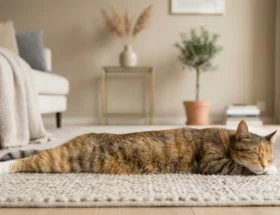
If your cat chooses to sleep beside you, on your bed, or near your feet, it may be a sign that it feels safe in your presence.
How to Tell If Your Cat Doesn’t Like Kisses
This is probably the most important part of understanding feline affection.
A cat doesn’t always make a dramatic attempt to escape when it dislikes something. Sometimes its discomfort appears through small changes in body language.
Watch for these signs:
- Flattened or turned-back ears: Your cat may be feeling uncomfortable or threatened.
- Tail flicking or lashing: Rapid tail movements can indicate irritation or overstimulation.
- Moving its head away: Your cat may be trying to avoid the contact.
- Tense body: A stiff posture can suggest that your cat isn’t relaxed.
- Dilated pupils: This can occur with excitement, fear, or stress, so consider the surrounding situation.
- Trying to escape: If your cat moves away, let it go.
Never hold your cat in place to give it a kiss.
These signals are worth taking seriously. Cornell University’s Feline Health Center explains how signs such as flattened ears, tail movements, and changes in posture can indicate fear, irritation, or aggression.
If you notice these signals, stop and give your cat some space. Respecting its boundaries helps build trust and makes future interactions more comfortable.
How to Show Your Cat Love Without Kissing
If your cat isn’t a fan of kisses, don’t worry. There are plenty of other ways to show affection.
In fact, some of the best ways to make your cat feel loved have nothing to do with cuddling.
1. Try the Slow Blink
Sit near your cat, relax your face, and slowly close your eyes before opening them again.
If your cat responds with a slow blink, enjoy the moment. You’re communicating in a way that is familiar to cats.
2. Let Your Cat Approach You
Instead of picking your cat up or reaching toward its face, give it the opportunity to come to you.
You can hold out a relaxed hand and allow your cat to sniff it.
If it rubs against your hand, you can offer gentle petting.
3. Play Together Every Day
Interactive play is a wonderful way to strengthen your relationship.
Use a wand toy or another suitable cat toy to encourage your cat to chase, jump, and explore.
Play provides mental stimulation and an opportunity to express natural hunting behaviors.
4. Respect Your Cat’s Favorite Spots
Some cats love being scratched under the chin or around the cheeks. Others prefer gentle strokes along their backs.
Pay attention to where your cat enjoys being touched and where it prefers to be left alone.
5. Create a Comfortable Environment
A safe, comfortable home is one of the greatest gifts you can give your cat.
Provide fresh water, suitable food, clean litter boxes, cozy resting areas, scratching surfaces, and places where your cat can retreat when it wants privacy.
6. Spend Quality Time Together
You don’t always need to do something special.
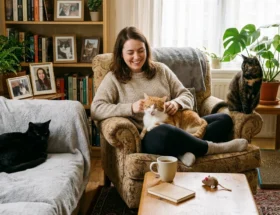
Sometimes sitting beside your cat while it naps, talking to it gently, or simply sharing a quiet moment is enough.
For many cats, familiar routines and calm companionship are important parts of a secure relationship.
Do Cats Know We Love Them?
This is one of the sweetest questions cat lovers ask.
We can’t know exactly how cats interpret human emotions, and we shouldn’t assume they experience love in precisely the same way we do.
However, research into feline behavior shows that cats can form social bonds with people, recognize familiar individuals, and develop preferences for particular humans.
Cats also respond to familiar voices, routines, scent, and interactions.
So while your cat may not understand that a kiss is your way of saying “I love you,” it can learn that you are a familiar and trusted companion who provides care, safety, and positive experiences.
And perhaps that’s what matters most.
Your cat doesn’t need to understand every human gesture. It needs to feel safe, respected, and cared for.
Frequently Asked Questions About Cats and Kissing
Do cats like being kissed on the head?
Some cats tolerate or enjoy gentle kisses on the top of the head, especially when they are already relaxed. Others dislike close facial contact. Watch your cat’s body language and never force the interaction.
Do cats know when you kiss them?
Cats probably don’t understand human kisses as a symbolic expression of love. However, they can learn to associate gentle kisses with familiar people and positive experiences.
Why does my cat close its eyes when I kiss it?
Closing the eyes can be a sign that your cat feels relaxed. However, context matters. Look for other signs of comfort, such as relaxed ears and a loose body posture.
Why does my cat move away when I try to kiss it?
Your cat may dislike close facial contact, feel uncomfortable, or simply prefer a different kind of affection. Give it space and allow it to approach you when it wants attention.
Is it safe to kiss your cat?
It’s best to avoid kissing your cat on the mouth or nose. Cats can carry microorganisms, and close contact with saliva may expose people to germs. The CDC recommends washing your hands after contact with cat saliva and following basic hygiene precautions.
Do cats kiss their owners?
Cats don’t kiss in the same way humans do, but behaviors such as nose touching, gentle head bumps, and rubbing their faces against you can be friendly social interactions.
Why does my cat lick my face?
Cats sometimes lick people as part of social grooming behavior. Licking can be a sign of familiarity or bonding, although it can also have other explanations. It’s best to avoid letting cats lick your mouth, eyes, or open wounds.
Final Thoughts: Love Your Cat in a Language It Understands
So, do cats like kissing?
Some do, some don’t, and others may enjoy it only occasionally. Every cat has its own personality and preferences.
The sweetest way to show your cat affection isn’t necessarily through kisses. It’s through understanding its body language, respecting its boundaries, providing good care, and making it feel safe.
You might express your love with a kiss, while your cat expresses its affection through a slow blink, a gentle head bump, or a quiet nap beside you.
Different languages, same special bond.
And if your cat happens to enjoy a gentle little kiss on the head, consider it a lovely bonus!